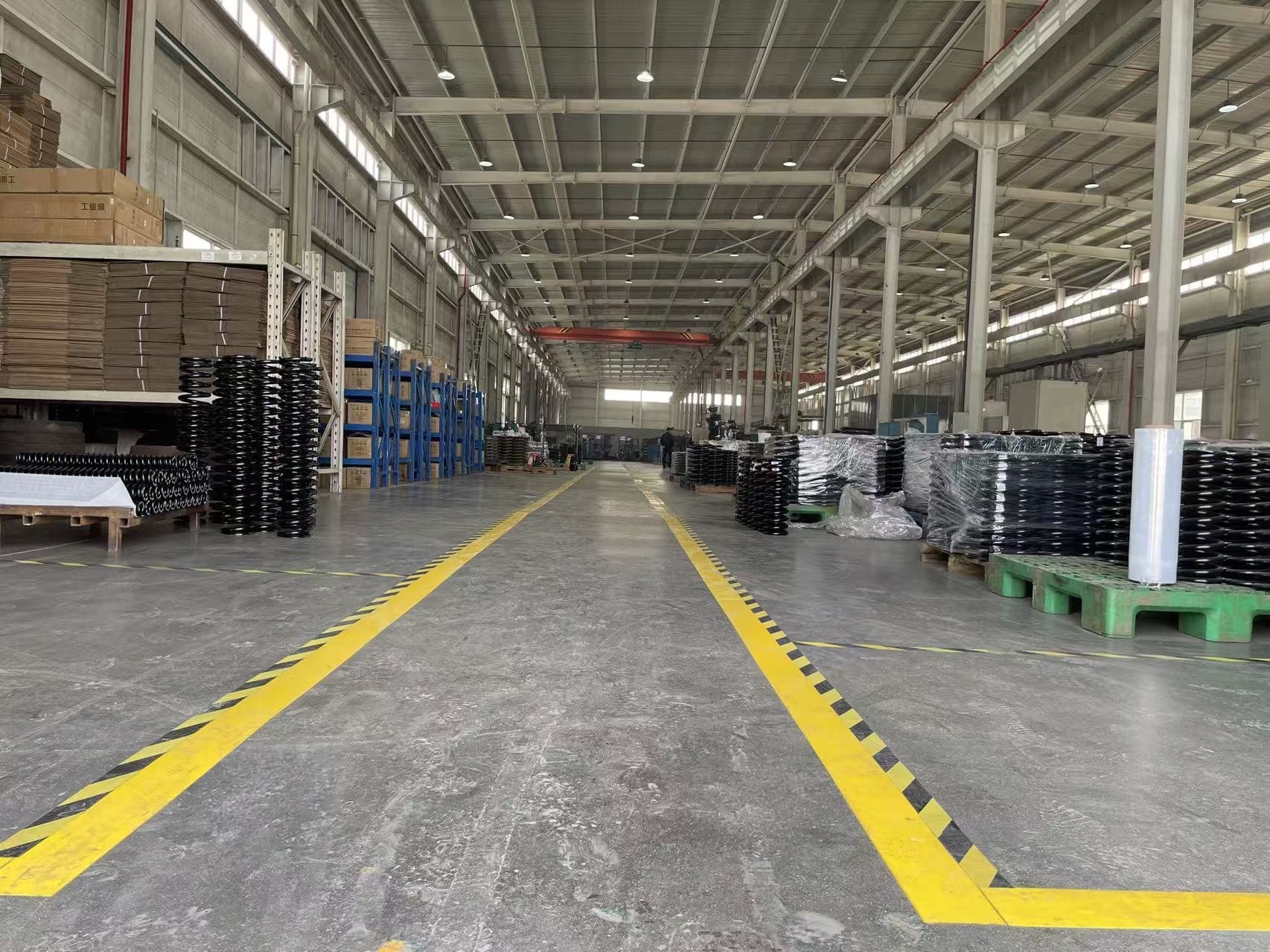
Factory Tour
Follow the main stages of spring production, from material review and forming to finishing and inspection. Each order follows its agreed drawing, process route and quality plan.
Production Process
These stages describe the process overview. The sequence and required controls depend on the drawing, material and agreed quality plan.
- Cold Coiling Process: The stated cold-coiling capability covers approximately 0.1–10 mm wire. Product geometry, material and achievable tolerances are confirmed during drawing review.
- Hot Coiling Process: Induction heating supports large-wire hot coiling for heavy industrial applications. Heating and heat-treatment conditions are selected for the material and required properties.
Capability Envelope and Key Parameters
- Automatic Cold Coiling: Our cold-coiling window covers wire diameters from 0.1 mm to 10 mm for compression, extension, torsion, wire forms, and other precision elastic parts.
- Medium-Freq. Hot Coiling: The highlighted hot-coiling window covers large-wire diameters from 14 mm to 50 mm for heavy-duty springs used in power equipment, heavy machinery, and demanding buffer applications.
- Standards Reference (GB / ISO / JIS): GB, ISO and JIS are reference systems. The specific standard, edition and acceptance criteria are agreed for each drawing and application.
- 5-50 tonf: Patent CN103604590B describes a spring strength and fatigue test rig designed for 5–50 tonf. Project test feasibility, fixtures and current equipment availability require confirmation.
Quality Control
- NDT & Load Testing: Magnetic particle inspection for suitable materials and load/displacement checks can be specified in the quality plan. Test coverage and sampling are agreed per project.
- Quality Plan & Documentation: Agree the applicable quality documents, traceability records, sampling and acceptance criteria during supplier qualification. Current certificate scope and validity require documentary confirmation.
Need to review the current workshop?
Request current photographs, relevant equipment information and the documents needed for your supplier assessment.