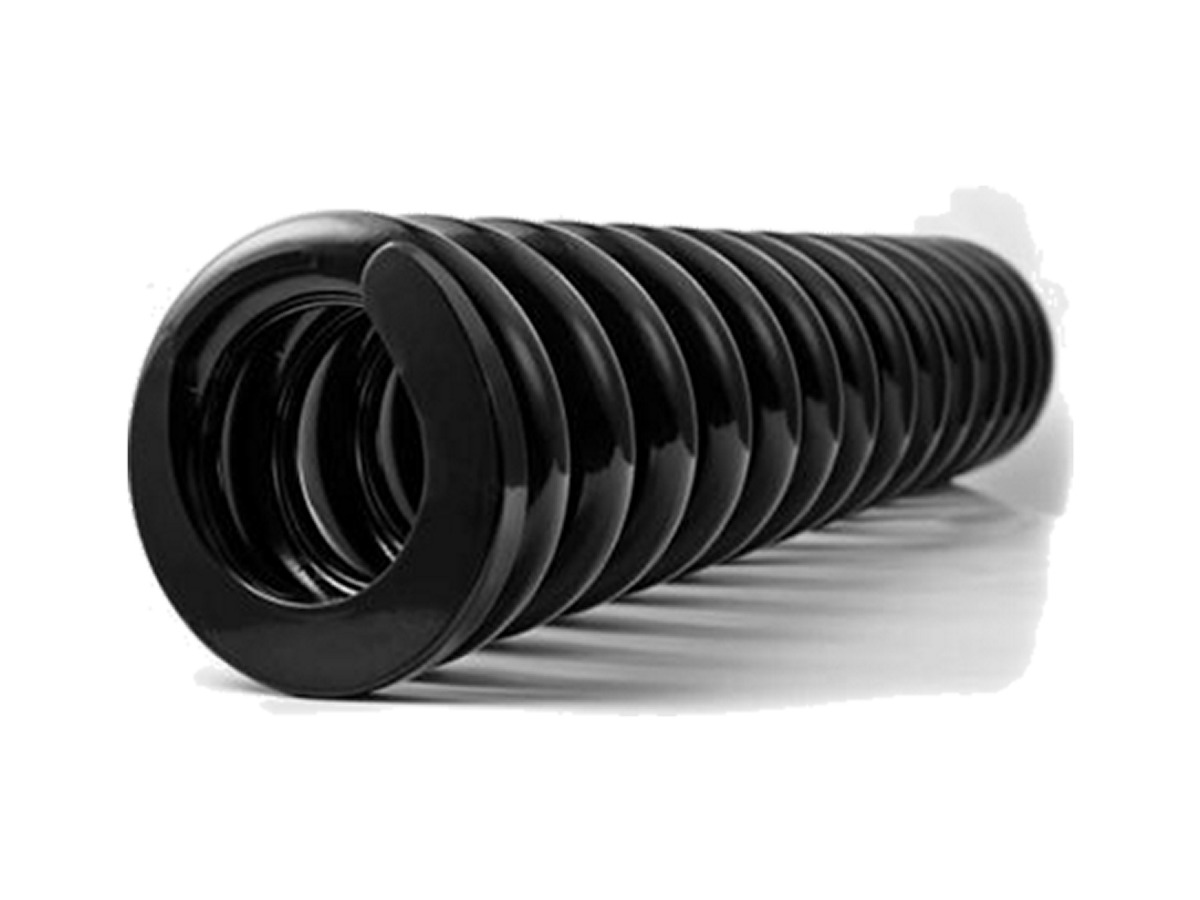
Heavy Duty Compression Springs, Hot Coiled
A hot coil spring is a helical spring wound from steel bar that has been heated, typically to about 850–950 °C, so that large diameters can be formed, and then quenched and tempered. Hot coiling is used when the bar is too thick to coil cold — for heavy duty compression springs in rail vehicles, vibrating screens, crushers, couplings and industrial buffers.
Product Overview and Project Fit
Heavy duty compression springs and large coil springs hot coiled from 14–50 mm bar for rail, mining and heavy machinery. Drawing review, peening, load tests.
Hot coil springs for large wire diameters, high-load machinery, transport equipment, and demanding industrial buffering applications.
- Large Dia.
- Fatigue Res.
- High Strength
Applications
- Heavy Ind.
- Machinery
Processes
- Hot Coiling Process
- Testing
Heavy duty hot coil spring guide
How hot coiled springs are made
A typical hot coiling route:
- Bar preparation — cutting to length and, where specified, end tapering so the end coils seat flat.
- Heating the bar to forming temperature, usually around 850–950 °C.
- Coiling on a mandrel to the specified pitch, diameter and hand.
- Quenching and tempering to the required hardness through the section.
- End grinding, shot peening, presetting, load testing, crack inspection and coating.
Where heavy duty springs are used
Hot coiled compression springs carry high loads in:
- Rail bogies, couplers and buffers.
- Vibrating screens, feeders and crushers in mining and aggregates.
- Heavy presses, forging equipment and industrial buffers.
- Power equipment, valves and large machinery mounts.
What to specify for a heavy duty spring
Send these with the drawing:
- Load at installed and working height, with tolerance.
- Bar diameter, outside or inside diameter, free height and active coils.
- Material grade, hardness, peening and coating requirements.
- Dynamic duty — frequency, stroke and required life.
- Inspection and test documents required with delivery.
Drawing inputs to confirm
Use these family-specific inputs to prepare a drawing review covering geometry, service conditions and acceptance. Final parameters are agreed for your project.
- Wire or bar diameter, outside/inside diameter and end geometry
- Free, working and solid heights; force at defined compression points
- Material, end grinding, duty cycles and inspection tolerances
FAQ
When is hot coiling used instead of cold coiling?
Hot coiling is chosen once the bar is too large to form cold. Wanjin company materials list a hot-coiling range of 14–50 mm bar and a cold-coiling range of 0.1–10 mm wire. Material grade, heat treatment and load targets decide the final route for each drawing.
What steels are used for hot coiled springs?
Silicon-manganese and chromium alloy spring steels that harden through the full bar section: 60Si2Mn and 60Si2CrA to Chinese GB/T 1222, 51CrV4 (50CrVA) and 54SiCr6 to EN 10089, and SAE 5160 and 9254 in North America. The grade is chosen for bar diameter, stress level and operating temperature.
Are heavy duty springs shot peened?
Springs for dynamic duty — rail suspension, vibrating screens, crushers — are normally shot peened after heat treatment to put the surface into compression and raise fatigue life, and are preset so they do not lose height in service. Static or low-cycle springs may not need peening.
Related Articles and Selection Guides
Contact Us
Share your drawing, working load, material and quantity. We will help define the next step toward a manufacturable spring.